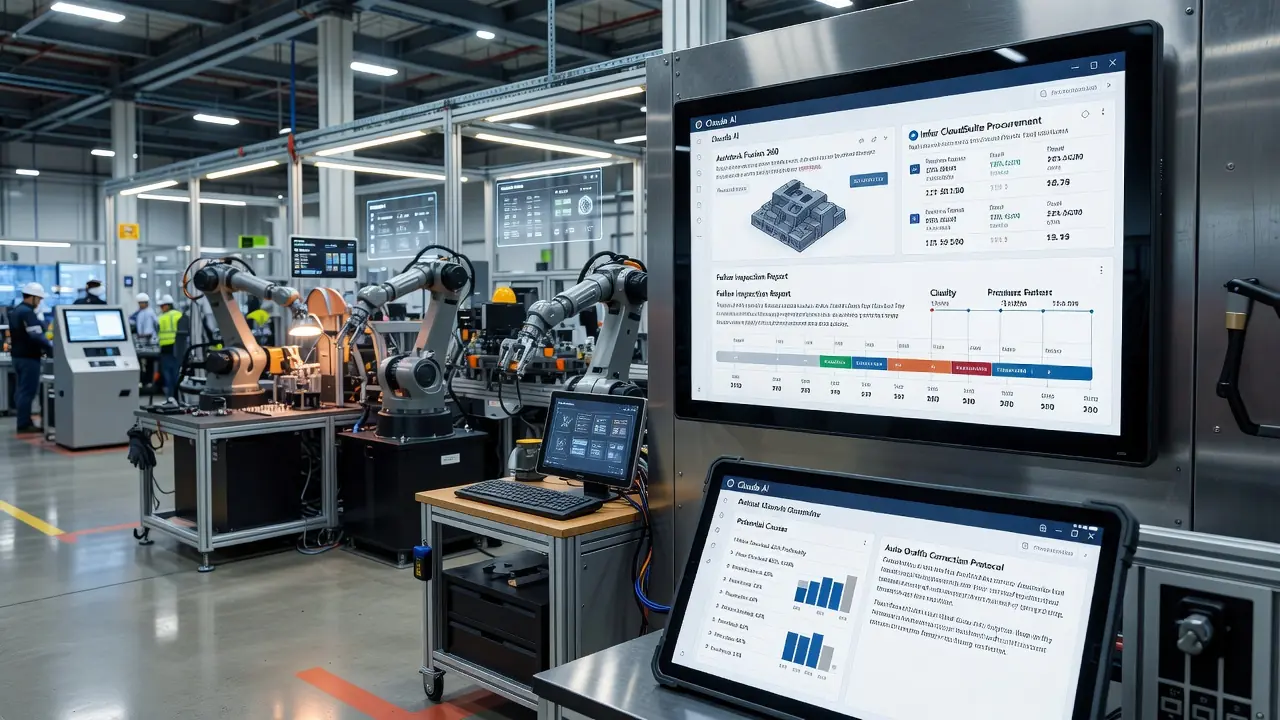
Anthropic rolled out a new Claude for Manufacturers plugin on Thursday, aiming its AI assistant at quality engineers, technicians, and production-line workers. The release arrives days before the company's expected trillion-dollar initial public offering, part of a broader push to tailor Claude to specific industries.
What the plugin actually does
The manufacturing package bundles 17 "skills," pre-built Claude configurations designed to handle narrow, repeatable tasks such as quoting a new job, diagnosing a machine breakdown, sourcing parts from a supplier, and compiling production data. The plugin also connects Claude to Autodesk Fusion design software and to Infor, a platform manufacturers use for procurement. Anthropic says more software connectors are likely to follow.
Notably, Claude won't operate equipment directly under this release - that capability is a separate initiative the company is still researching. Instead, the tool is meant to assist with paperwork, analysis, and documentation that surrounds physical production work.
Why Anthropic is targeting factories
Lauren Collett, Anthropic's enterprise go-to-market leader, told Business Insider that manufacturing involves "complex and judgment-heavy work" and that advancing model capabilities make this "a really, really great time" to tackle such business processes. She said customers reported having "more work than their experienced people have time to get through," so the plugin targets repetitive back-office tasks rather than core engineering judgment.
As an example, Collett described a scenario where a part fails inspection: Claude could document the failure, search past reports or email records for similar defects, rank likely causes, draft a correction report, and route it to a quality engineer for review.
Part of a broader enterprise strategy
The manufacturing plugin follows similar industry-specific Claude offerings Anthropic has built for healthcare, financial services, legal work, and government agencies. Following strong adoption of its Claude Code product among developers, the company is betting that comparable tailored tools can drive usage across other professional sectors - a thesis central to its pitch to IPO investors.
Collett framed the opportunity around workforce shortages: "Experienced people are hard to find," she said, adding that the tools aim to give existing staff "more time for the decisions that need their judgment."